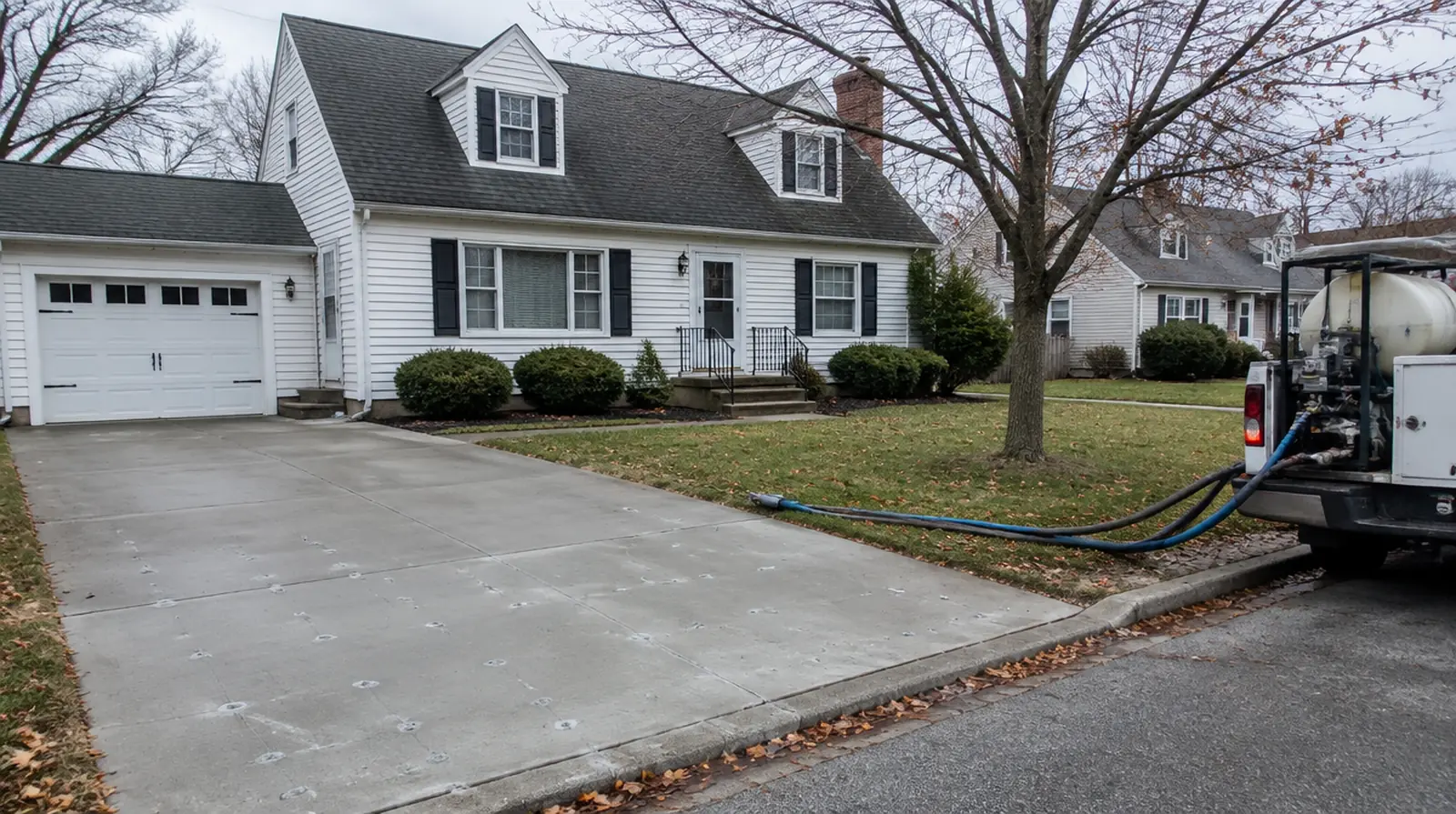
Why slabs sink in East Providence
Much of the city sits on glacial outwash sands and gravels, with pockets of older fill near Phillipsdale, the Seekonk River shoreline and former mill sites. Fill that was never fully compacted keeps settling for years. Down in Riverside and other low-lying blocks, the ground stays wetter, so frost heave in winter and soft ground in spring both tug at outdoor slabs.
Water does the rest. Downspouts that empty next to a driveway, a leaking irrigation line or runoff from a neighbor's yard wash fine soil out from under the concrete. Once a void forms, the next freeze-thaw cycle widens the crack and the panel tilts farther.
Signs you need leveling
- A lip between driveway panels or at the garage door that catches a tire or a snow shovel.
- Walkway slabs that rock when you step on them, or trip edges along Taunton Avenue–area sidewalks.
- Patio sections that tip toward the house or hold puddles that never used to form.
- Doors that scrape or stick after a panel next to the foundation dropped.
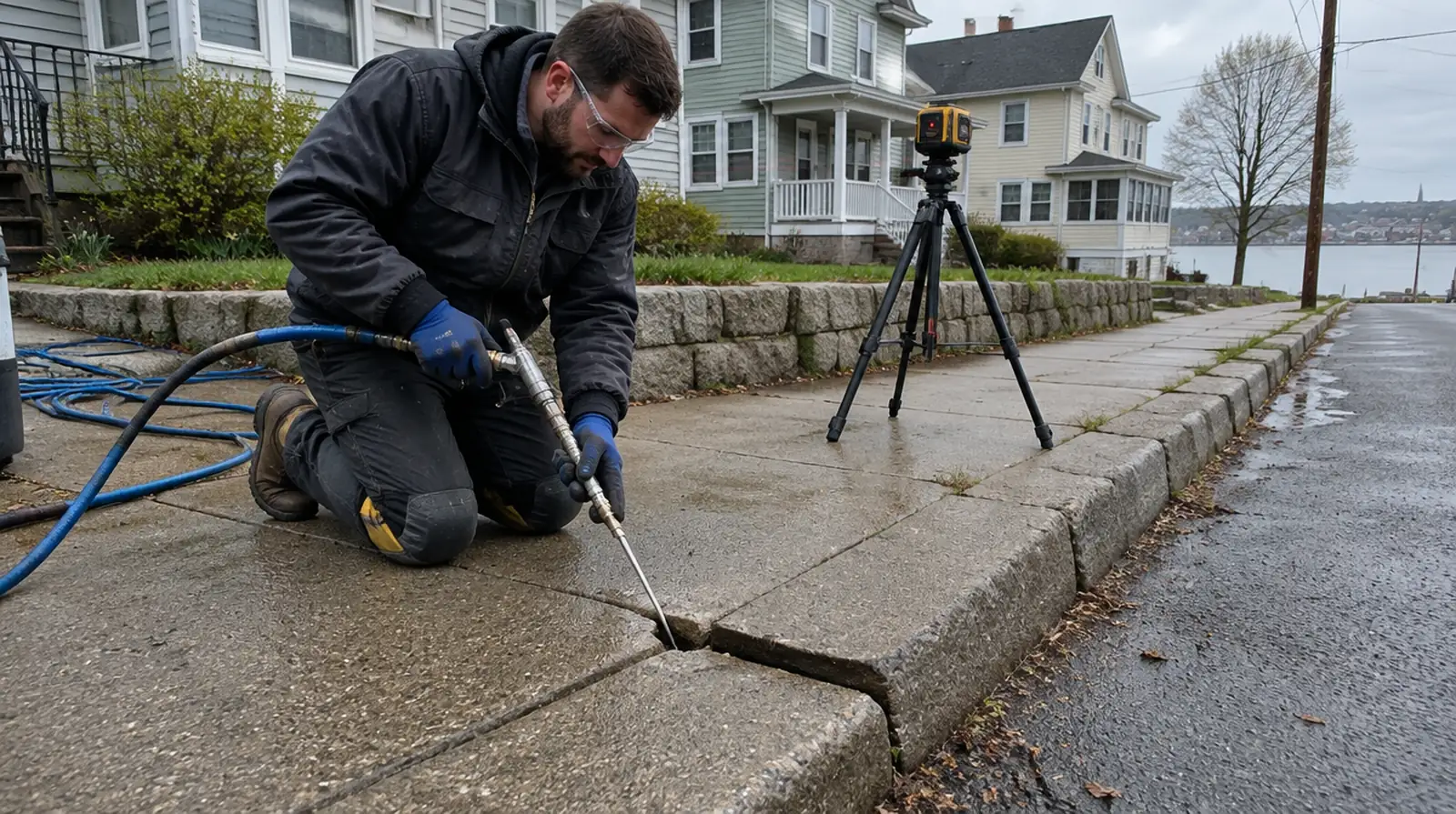
How foam slab lifting works
We drill small ports through the sunken panel, inject expanding polyurethane foam underneath and watch the slab rise with a laser level. The foam fills voids, densifies loose soil and sets in minutes. Injection holes are patched to match, and most residential jobs are done in a day. You can usually drive or walk on the slab the same afternoon.
Foam lifting is not magic. If a slab is shattered into many pieces, heavily scaled from road salt off Pawtucket Avenue or has no structural integrity left, replacement is the honest answer. We tell you which situation you are in before any work starts. For new pours after a failed slab, see our concrete driveways page.
Neighborhoods we see the most
In Riverside and Kent Heights it is often a postwar cape with a single-car driveway that was widened over the years and has settled at the seam. In Rumford, longer drives and older carriage walks settle where fill meets native sand. Around Watchemoket and Six Corners, shared drives and narrow side walks take heavy foot and car traffic. Phillipsdale lots on former industrial ground sometimes need deeper probing before we quote.
Winter, salt and timing
Rhode Island winters swing above and below freezing again and again. A slab that already has a void under it heaves unevenly, then drops again in the thaw. Road salt tracked in from Pawtucket Avenue and Taunton Avenue makes surface scaling worse, but the settlement itself is almost always a base problem. We prefer to lift in spring through fall when the ground is workable; mid-winter lifts are possible on mild days if access is clear of ice.
What a visit covers
We measure the drop, check drainage and look for active water sources. You get a written price for lifting, and a clear note if replacement would cost less in the long run. Related repairs, such as rebuilding crumbled concrete steps or pouring a new walkway panel, can be priced in the same visit.
Foam versus replacement on older East Bay lots
A full tear-out means saw-cutting, hauling, rebuilding the base and waiting for cure before you can park again. On a Riverside cape or a Rumford colonial with plantings and stone edges you care about, that disruption is the real cost. Foam lifting keeps those edges in place when the slab is still in large, sound pieces. We compare both options in writing so you can weigh a one-day lift against a multi-day pour.
After a lift, we can seal open cracks so brine from Pawtucket Avenue and Taunton Avenue has fewer paths into the surface. If you later want color on a basement or patio slab, our stained concrete service covers that separately.
Concrete leveling questions
How long does foam lifting last?
When the cause of settlement is addressed and drainage is fixed, lifts commonly hold for many years. If water keeps washing soil out, any repair will fail again.
Will lifting fix a badly cracked slab?
It can close some gaps by bringing panels back together, but open cracks may still need routing and sealing afterward.
Do you work outside East Providence?
Yes, including Riverside, Rumford, Pawtucket and nearby East Bay towns.
Have a sunken slab checked
Call us. We will measure the drop, look at drainage and tell you whether lifting is the right fix.
Call (401) 320-4188